A Data Expert Uncovers the Power of Re-Commerce
Join Shelley and Romain Fouache, CEO of Akeneo, as they discuss why eBay’s acquisition of Depop for $1.2 billion strengthens its core business and marks a structural inflection point.
Retail insights at the intersection of now and next. Unfiltered. Unbiased

Join Shelley and Romain Fouache, CEO of Akeneo, as they discuss why eBay’s acquisition of Depop for $1.2 billion strengthens its core business and marks a structural inflection point.


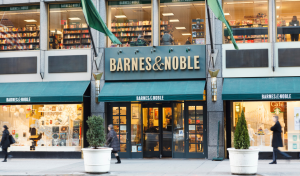
The Barnes & Noble strategy of deferring to local taste over stock-wide uniformity and treating stores as community hubs rather than depots of inventory stands in stark contrast to Amazon’s homogenized and algorithmically curated marketplace.

Retail, which has always been a canary in the coal mine with regard to the behavior of our overall economy, will now be under even more significant pressure this year. Retail does, after all, make up some 70 percent of the U.S. economy. The guarded prognosis, widely held by many, if not most, industry leaders, becomes even more problematic with a war underway in Iran. If this conflict becomes a “forever war,” inflation could become explosive.

Even well-off Gen Zs don’t have the once-promising career prospects as their millennial predecessors—and let’s be real, it’s hard to justify buying a $4,500 Murikami+LV bag with Afterpay if you have no prospect of money coming in.

The Saudi luxury consumer is values-led and socially attuned: they invest in quality, heritage, and prestige, but they also look for meaning, local resonance, and a brand’s ability to show respect through detail.

OK, play it again one more time. At first, I thought I was reading the satirical Onion when I saw an interview with former Saks/Neiman’s/HBC/Lord & Taylor/etc., self-styled entrepreneur.

Join Shelley and Dan Altman, chief economist and bestselling author of the High Yield Economics newsletter, as they zero in on what the ruling will trigger for retailers and consumers. They discuss whether companies will claw back the tariffs they have paid.

Repositioning malls from single-purpose points of transaction into dynamic community forums promoting human interaction is the sustainable reinvention of irrelevant malls. But, given the ginormous price tag involved, there are only a finite number of malls destined for such rejuvenation. The vast majority will perish.

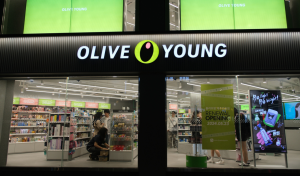
What distinguishes Korea’s retail expansion from China’s is not just aesthetics, but strategy. Chinese platforms have often relied on price leadership and logistical scale, pushing vast volumes of low-cost goods through digital channels. Korean brands, by contrast, have emphasized brand equity, storytelling and innovation.
Sign up for emails from The Robin Report and get our Daily Report, the latest in retail insights and analysis, delivered to your inbox.